A shisha lounge POS system that holds the whole table
A bowl, its flavour, the drinks that arrive with it, the second round at half nine and the food at ten — one order on one table, open for as long as the guests are, and split at the end by what each of them had.
A lounge order outlives the first bowl
A shisha lounge is not a smoke shop with chairs, and it is not a restaurant with one extra category on the menu. Four people sit down at nine and are still there at one. In between they order a bowl and choose a flavour for it, then drinks, then food, then a second bowl, and somebody asks for a coal change that never appears on any bill. One of them leaves at eleven and wants to pay for what they had. The rest settle at close. Almost nothing about that resembles the service a POS is normally sold against: a restaurant’s check belongs to a party that arrives together, eats a sequence of courses and leaves together, and a bar’s belongs to a group whose membership drifts but whose drinks arrive one at a time. A lounge’s belongs to a *table* — a piece of the room that is occupied, that accumulates, and that has to still be legible three hours later to somebody who was not there when it opened.
The flavour has to stay on the bowl it was ordered for
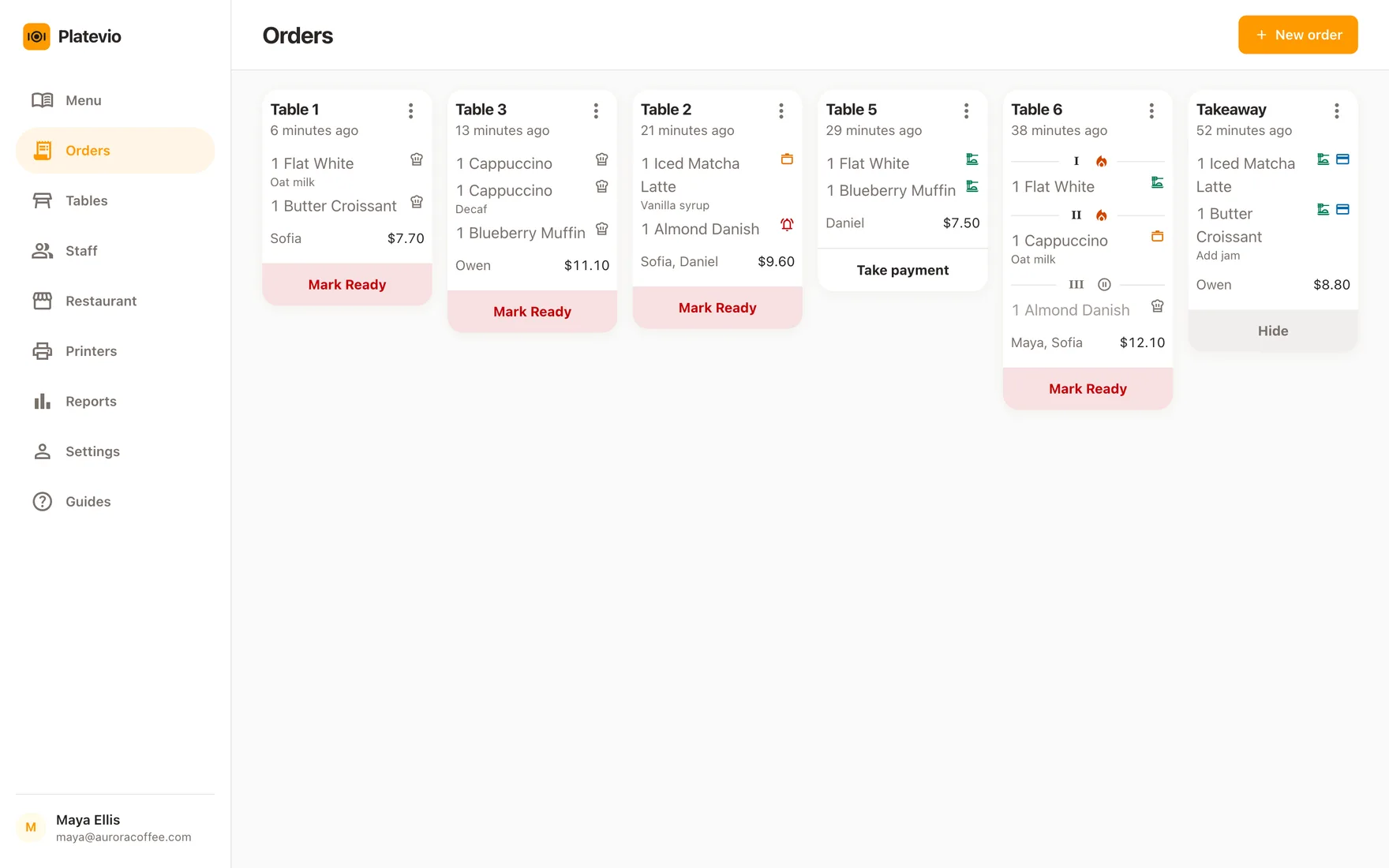
The failure in a lounge is never the first bowl. It is the second one, at half ten, when the table has ordered two shishas with different flavours, a plate of food, four drinks and a replacement bowl, and nobody can say any more which flavour was for which pipe or whether the second one has been made yet. Platevio keeps that as data rather than as memory: the flavour is a priced extra on the individual bowl it was chosen for, an unusual blend is a note on that same unit, and every unit — bowl, drink or plate — moves through ordered, preparing, ready and served on its own. So the floor can see that one shisha is out and the other is still being packed, and the bill at the end lists what each guest actually had rather than a total somebody has to divide by four.
What Platevio gives a shisha or hookah lounge
Seven things, all of them about a table that stays open for hours.
-
A menu for bowls, flavours, drinks and food
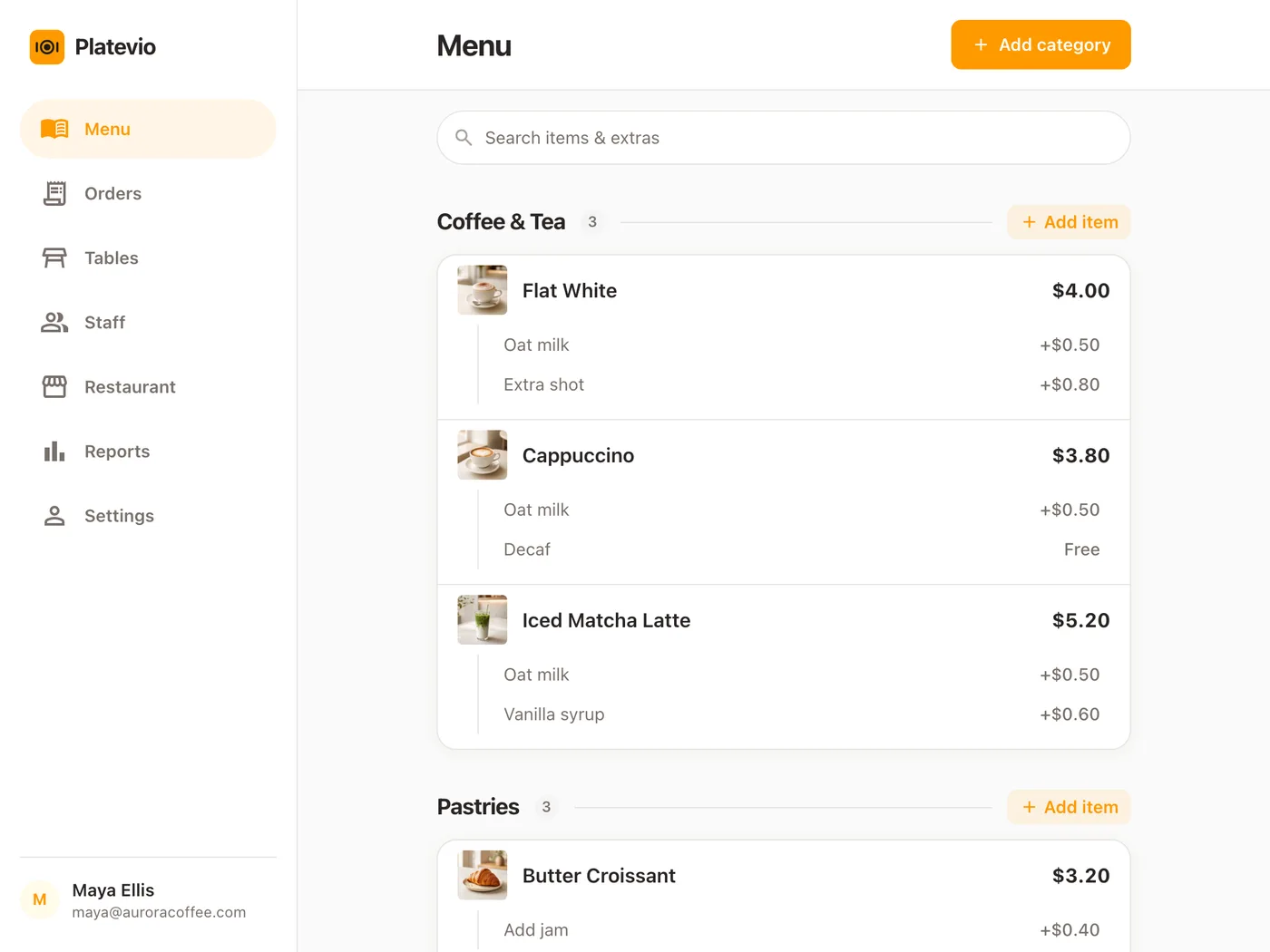
Your categories, in your order — shisha, flavours, cold drinks, tea, food — each item with its price and a line of description. Attach the flavours and premium bases a bowl can take as priced extras, so choosing one on the bowl adds it to the bill without anyone doing arithmetic on the floor.
-
The table’s order stays open
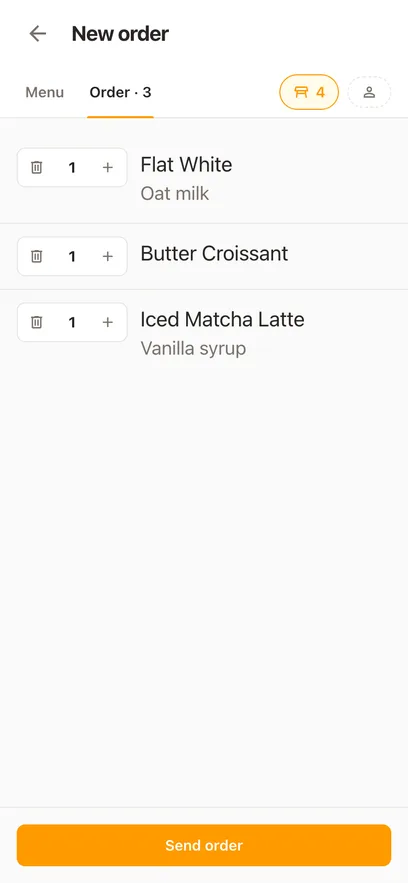
Put the order on the table it is sitting at and add to it all evening. The second round joins the same record as the first rather than becoming a separate receipt nobody connects back. A table is a reference, not a copy, so relabelling table 12 relabels it on the order already open there.
-
Every bowl, drink and plate on its own clock
Each unit moves through ordered, preparing, ready and served by itself, so one shisha can be out while the second is still being packed and the food is still on. Mark something ready too early and you can walk it back to preparing; a unit cancelled by mistake can be put back on the ladder.
-
Split by what each guest actually had
Select the exact items one person is covering and record them settled — cash, card, cheque, meal voucher, or a method you named yourself — and leave the rest of the table open for the people still sitting there. The guest who leaves at eleven pays for their own two drinks and nothing else.
-
A floor your team can read at a glance
Lay out the rooms and the tables the way they really sit, in an editor you drag, and the floor shows each table’s state in words: seated, waiting on the kitchen, ready to pay, settled. Whoever walks in at nine can see where the room is without asking the person who has been on since six.
-
Twenty-six languages, Arabic among them
The app itself speaks twenty-six — Arabic, English, Spanish, Turkish and twenty-two more — chosen per person rather than per venue, so the floor can work in one language while the kitchen works in another, and a new hire picks their own on the first shift without anyone changing a setting for the whole lounge.
-
Bills and tickets, on the printer already in the lounge
Platevio prints to thermal printers over WiFi, Ethernet, USB and Bluetooth — ESC/POS and Star Micronics. Each ticket printer takes only the categories you give it, so the bowls print at the shisha bench and the food prints in the kitchen, and the bill is driven from the tablet the table was served on, so it reaches the table at the end of a long evening.
One table, first bowl to last payment
A Friday, four guests on table 12, in from twenty past nine.
-
21:20
The table opens
Two shishas on table 12, one with a mint extra and one with a note for an unusual blend, and four cold drinks on the same order. Sent.
-
21:26
One bowl is out before the other
The drinks and the first shisha go to ready on their own; the second is still being packed. The floor can see which is which instead of carrying two and hoping.
-
22:15
The second round joins the same order
A plate of food and two more drinks are added to the order already open on table 12. What was ordered at nine keeps the name and price it was sold at, and the new items come on at tonight’s.
-
23:05
One guest leaves and settles their own
Their two drinks and their share of the food are marked paid on a card taken at your own reader. The rest of the table stays open, and the floor still shows 12 as occupied.
-
00:40
The table closes
The remaining items are settled, the order closes when the last one is, and table 12 goes back to free on the floor.
How to choose a shisha lounge POS system
Demo a whole evening, not a sale. Open a table with two bowls on different flavours, add drinks and food, put a second round on it an hour later, have one guest leave early and pay for their own, then settle the rest. Watch whether the bowls reach the shisha bench and the food reaches the kitchen on their own tickets, and whether the bill at the end already reads by guest, because those are the two a demo most often glosses over.
- Can a flavour or a premium base be a priced choice on the bowl, rather than free text?
- Can one table keep a single order open for four hours and several rounds?
- Can shisha, bar and kitchen items reach different people without one screen for everything?
- Can a flavour that has run out be taken off sale from one device and vanish from every other one at once?
- Does every member of staff get their own login, with a role that fits what they do?
- Can one guest pay for their own items, on their own method, and leave?
- Can each member of staff use the app in their own language, chosen per person rather than per venue?
- Can you read a business day’s sales, payments by method and unpaid tables, and open the check behind any number?
Shisha lounge POS questions
- Is there a POS system made for shisha or hookah lounges?
- A few specialists exist, and a restaurant POS can serve a lounge well when it handles the things a lounge actually does: one order per table held open for hours, priced choices on the bowl, each item at its own stage, a ticket for the shisha bench that is separate from the kitchen’s, and a bill split by guest. Platevio does all of that, free, on the phones and tablets the lounge already owns.
- Can Platevio keep a lounge table open across several rounds?
- Yes. The order belongs to the table, and later bowls, drinks and food are added to that same order rather than starting a new one. Items already on it keep the name and price they were sold at, along with their own status and whatever has been settled against them.
- Can it handle shisha flavours and custom blends?
- Set the flavours and bases up as priced extras on the shisha item, and choose them on the individual bowl as you take the order. An unusual blend goes in a note on that same bowl, which reaches the person packing it on the kitchen board and prints under the bowl on the bench’s ticket.
- Can the shisha bench get its own tickets, separate from the kitchen?
- Yes. Each ticket printer takes the categories you give it, so a printer at the bench prints only the bowls and their flavours while the kitchen’s prints only the food, over WiFi, Ethernet, USB or Bluetooth to the ESC/POS or Star Micronics printer you already have. The same units sit on the kitchen board, each at its own stage, so whoever is packing can mark a bowl ready the moment it is.
- Can I take a flavour off the menu halfway through the night?
- Yes. Every item has an available-to-order switch, and flipping it on one device takes the item off every other device in the lounge at once, so the floor stops selling a flavour the moment the bench runs out. Flip it back when the delivery arrives and it is on sale again everywhere.
- How does a lounge take payment with Platevio?
- On the reader you already have. Take the card there, then record in Platevio what was settled and how — cash, card, cheque, meal voucher or a method you named yourself — down to the individual items one guest is covering. Because we are not your processor, no percentage of your sales comes to us, and the payments report shows what came in by each method for every business day.
- Does the lounge POS work in Arabic?
- Yes — Arabic is one of the twenty-six languages the app speaks, and each person picks their own, so one member of staff can work in Arabic while another works in English on the same order at the same table.
- How much does a shisha lounge POS cost, and what does it need?
- Platevio is free: no card, no plan, and nothing charged per device, screen or user. It runs in the browser on the phones, tablets and computers your staff already own, and each of them signs in with their own login as Owner, Administrator, Manager, Waiter or Cook, so the bench sees the bowls, the floor takes the orders and the owner reads the day’s sales, orders and unpaid tables with every check behind the numbers.
Open your restaurant tonight
It takes a minute: your restaurant, your first menu, and you are taking orders.